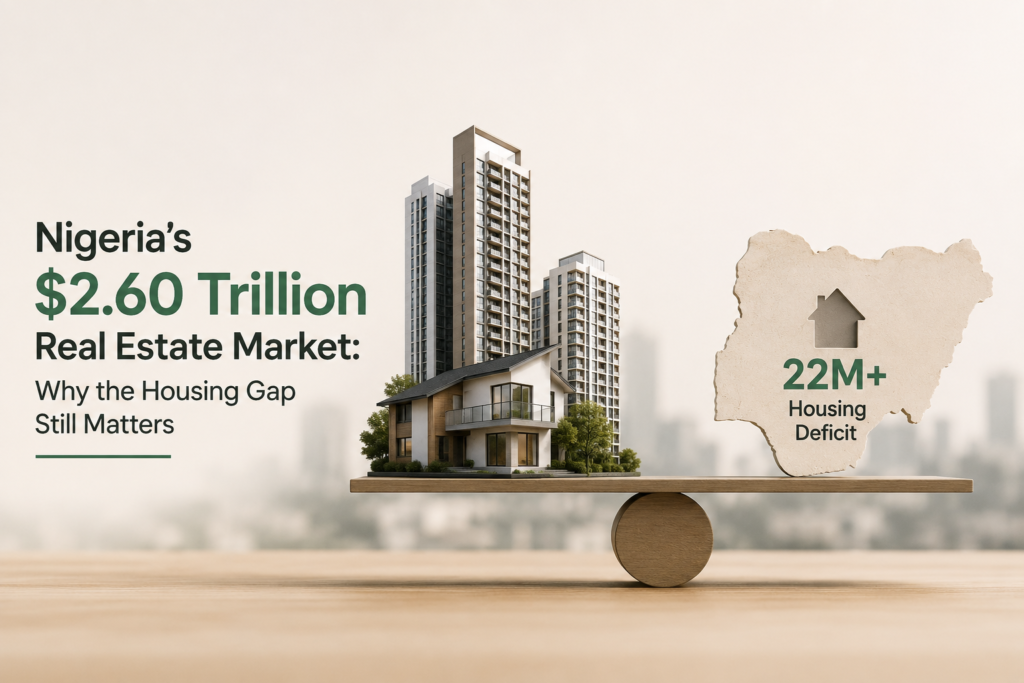
The Nigerian Real Estate Market has recently taken a drastic raise with market valuation putting it at about $2.60 Trillion. Residential properties account for the largest share of the total asset value, highlighting the continued importance of housing within the country’s real estate landscape.
However, behind these impressive figures lies a persistent challenge: The housing deficit in Nigeria.
The huge size and growing value of the real estate industry have not been able to close the housing supply gap, which is still estimated at more than 22 million units in the country. The need for housing continues to grow because of population growth, rapid urbanisation and more people moving to major cities, but supply is not keeping up.
A Growing Market, but an Unresolved Housing Problem
The Nigerian real estate industry is still a very vital sector in the country’s economy. The combined output of construction and real estate amounted to around 18% of the country’s total output in 2025, according to the latest research undertaken in the industry.
But the growth in the industry does not translate to houses that are now more affordable for the average Nigerian.
Property prices are rising, mortgages are not easy to get and the cost of building is rising, making it difficult for many households to buy a home. Mortgage penetration remains below 5% of the country’s GDP, forcing many potential homeowners in Nigeria to rely on personal savings, instalment payment plans or incremental self-build projects.
The situation is especially important in rapidly growing urban areas. In Lagos State alone, there is a housing shortage of about 2.3 million units, which reflects the growing disparity between the supply and demand for housing.
Why the Housing Gap Still Matters
The housing deficit is more than just a shortage of dwellings. It directly affects affordability, urban development, infrastructure and quality of life for millions of Nigerians.
As the number of people moving to cities in search of jobs and economic opportunities increases, so does the demand for existing housing. But without enough affordable housing being developed, property prices and rents could continue to rise, pushing more people into overcrowded towns and fast developing peri-urban areas.
This brings us to an interesting question for Nigeria’s real estate market. If the market is worth trillions of dollars, how much of that growth is actually translating into affordable homes for those who need them most?
Affordable Housing Remains a Major Opportunity
Nigeria’s housing deficit is also one of the best real estate investment opportunities in Nigeria.
Developers, investors and government agencies may have more interest in mass and low-cost housing projects. Public-private partnerships, cooperative housing projects, phased estate developments and flexible payment systems all could make a real difference to access to residential property.
The sector is slowly changing through technology. Property technology platforms are helping to reduce the time it takes to complete transactions, increase transparency and limit the risk of property fraud. At the same time, developers increasingly use smart home technology, sustainable building materials and energy-efficient systems in modern-day housing developments.
Closing the Gap
Nigeria’s $2.60 trillion real estate valuation indicates the size and potential of the country’s property industry. The housing shortfall, however, is one of the sector’s most significant structural concerns.
The next chapter in real estate expansion shouldn’t be about rising property values or new luxury developments. The industry’s ability to deliver more affordable and sustainable housing should also determine the success of the next chapter in real estate expansion.
The housing shortage is more than a hurdle for developers and investors. It gives a good indication of where some of the best real estate opportunities in the country might be.
